
Search Kalawao County Released Inmates
Kalawao County released inmates records come through a mix of state tools and Maui County systems. Kalawao is the smallest county in the United States by population. Only 82 people lived there at the 2020 census. The county has no jail, no police force, and no court of its own. Arrests in Kalawao get processed through the Maui Police Molokai Division and move to Maui County facilities. Historical inmate files from the old leprosy settlement live in the Hawaii State Archives. This page lists each search path for Kalawao County released inmates records.
Kalawao County Overview
Kalawao County Law Enforcement
Kalawao County has no police department. Law and order on the Kalaupapa Peninsula is handled by the Maui County Police Department. The Molokai Division runs patrols and response for the whole peninsula. Deputies and officers from Maui Police come in by air or by sea to respond to calls. The small permanent population and the remote setting keep arrest counts very low. Most years see zero or one arrest in Kalawao County. Still, any arrest that does happen flows through the Maui system. That makes the Maui Police Department the first stop for current Kalawao County released inmates info.
The Kalaupapa Peninsula is also managed by the National Park Service. Federal rangers patrol the park area. Rangers can detain people for federal offenses inside the park boundary. Federal cases go to the U.S. District Court for the District of Hawaii. Those arrests do not show up in state or county databases. You would use the federal Bureau of Prisons locator for a federal Kalawao arrest. State offenses, though, all move through Maui Police. The Hawaii Department of Health also plays a role, since the old settlement site remains under DOH care. Staff and residents there work with both state and federal rules.
Arrests in Kalawao County face a unique travel step. There is no road in. You reach the peninsula by small plane, by mule trail, or by boat. Anyone taken into custody must be transported off the peninsula. That means a short flight or boat ride to Maui. From there, the person goes to the Maui Community Correctional Center in Wailuku.
Note: Access to Kalaupapa National Historical Park is limited and requires a permit, which adds to the tight control over who enters and exits the peninsula.
Released Inmates Records in Kalawao
Released inmates records for Kalawao County are not kept in Kalawao. Records are held in the Maui County system. Any person arrested on the peninsula gets booked at the Maui Community Correctional Center. MCCC sits at 600 Waiale Road, Wailuku, HI 96793. The main line is (808) 243-5842. MCCC handles pre-trial detention, short sentences, and intake for the whole Maui County area. That includes the islands of Maui, Molokai, Lanai, and the Kalawao County peninsula. A booking at MCCC leads to a record in the state corrections system.
The Hawaii Department of Corrections and Rehabilitation tracks each sentenced inmate across the state. The DCR runs Hawaii SAVIN for victim and public alerts. SAVIN shows custody status, facility moves, and release dates. A Kalawao County arrest that leads to a sentence will track in SAVIN just like any Maui or Honolulu case. You do not search by Kalawao County in SAVIN. You search by the inmate's name or by their offender ID. The system returns the current facility and the release status. That is the fastest way to check on someone who was arrested on Kalaupapa.
Public records access in Kalawao County falls under two sets of rules. State criminal justice files follow the rules for the county that holds them, which is Maui. Historical patient and settlement files, though, follow a different track. Those files are held by the Hawaii State Archives and by the National Park Service. Each has its own access rules. See the sections below for each path.
For the full list of state facilities and the programs that run at each one, visit dcr.hawaii.gov. The DCR site also has contact details for the reentry staff that work with released inmates.
Historical Inmate Records in Kalawao County
Kalawao County has a long and heavy history. The peninsula was set aside in 1866 as a settlement for people with Hansen's disease, which was then called leprosy. From 1866 to 1969, patients were forced to live there under state isolation law. The Hawaii Board of Health ran the settlement. Patients were in a form of civil custody, not criminal custody. Still, the records kept by the Board of Health look a lot like inmate files. They list names, birth dates, intake dates, discharge dates, and release or death records. These files sit in the Hawaii State Archives.
The Hawaii State Archives is at 364 S. King Street, Honolulu, HI 96813. The Archives holds settlement registers, patient files, and administrative records for Kalawao County. Files over 75 years old are open to the public. More recent files may have privacy limits due to medical content. A researcher can visit the reading room, file a request, or work with staff by phone. Some files have been digitized. Others are on paper only and need an in-person visit. Staff help with index searches and with family research. The Archives also holds photographs and maps from the settlement period. These help fill in context for a Kalawao County released inmates search that goes back to the early 1900s.
Key types of historical Kalawao records include:
- Settlement admission registers from 1866 to 1969
- Patient medical files held by the Department of Health
- Discharge and release lists by year
- Administrative letters and Board of Health reports
- Cemetery and burial records for patients who died at the site
- Photos, maps, and site plans of the settlement
The Hawaii Vital Records office holds birth and death records tied to the settlement. A death record from Kalawao can give you a discharge or release date that is not in other files. Vital records access has its own rules under state law. Only the person named, a parent, a spouse, a child, or a legal agent can get a full certified copy. Informational copies may be open to others after a set time.
Kalaupapa National Historical Park
The Kalaupapa National Historical Park now covers the whole peninsula. The park was set up in 1980 to protect the settlement site and honor the people who lived there. The National Park Service runs the park in step with the Hawaii Department of Health. The park holds its own records on the site, on the remaining patient residents, and on the work of the park. The park also keeps a research archive open to scholars. Access to the park is limited to permit holders, residents, and invited guests. Tours used to run but were paused in recent years. Check the NPS site for the current visit rules.
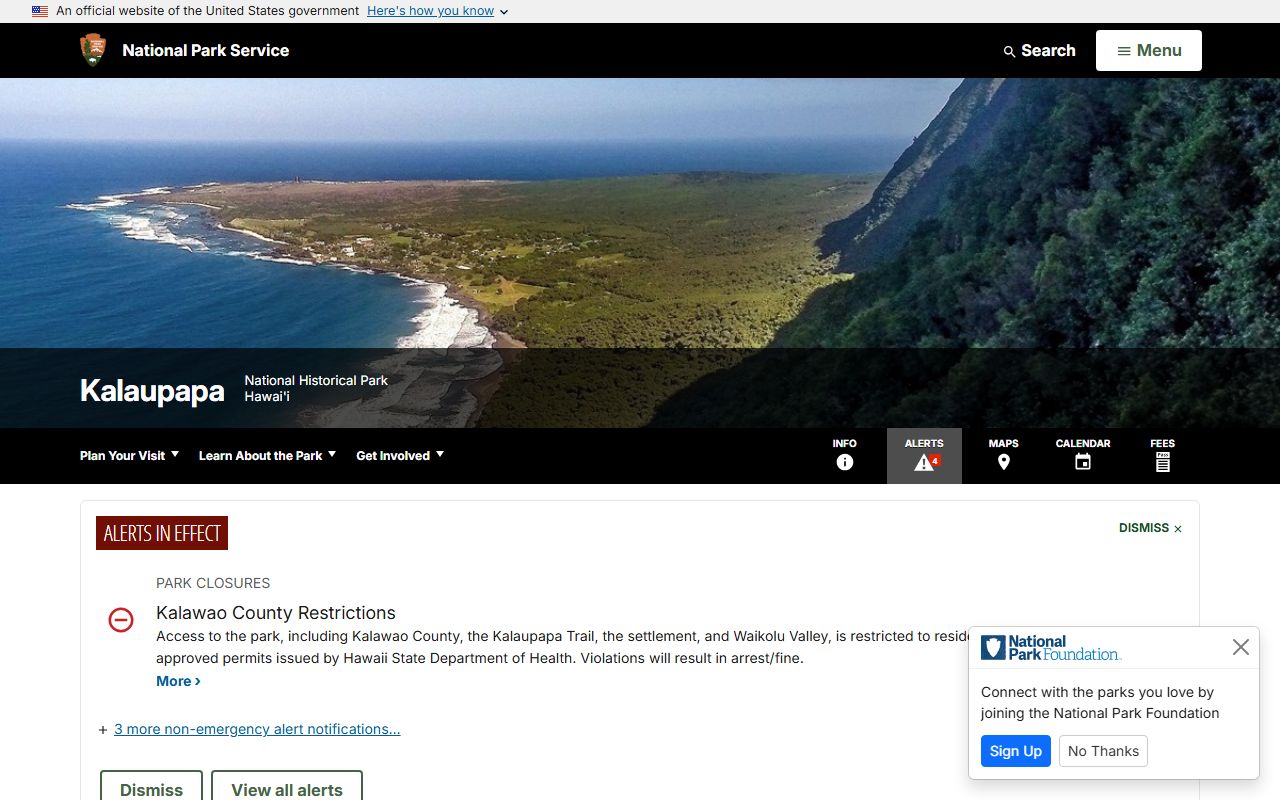
The park site at nps.gov/kala has the permit form, the research request form, and the contact info for the park superintendent. Researchers who want to see patient files or park records must submit a written request. Federal Privacy Act rules apply to any file that names a living person. Older files that name only people who have passed may be open with less review. The park also hosts oral history projects that fill in gaps where paper records are thin.
NPS law enforcement in the park can process arrests under federal law. Those arrests flow to the U.S. District Court, not the state system. A Kalawao County released inmates search that involves a federal case needs the BOP locator and PACER for court records. Park rangers also coordinate with Maui Police for state charges that happen inside the park area. That joint approach keeps the legal path clear for each type of case.
State Tools for Kalawao Released Inmates
State-level tools are the main way to track Kalawao County released inmates. Because the county has no jail and no local records office, all roads lead to state systems. Hawaii SAVIN is the first stop for current custody status. SAVIN is free and runs 24 hours a day. You can sign up for alerts by phone, by text, or by email. Alerts fire when an inmate moves, gets released, or escapes. This tool covers every state facility in Hawaii, which means every place a Kalawao arrest could end up.
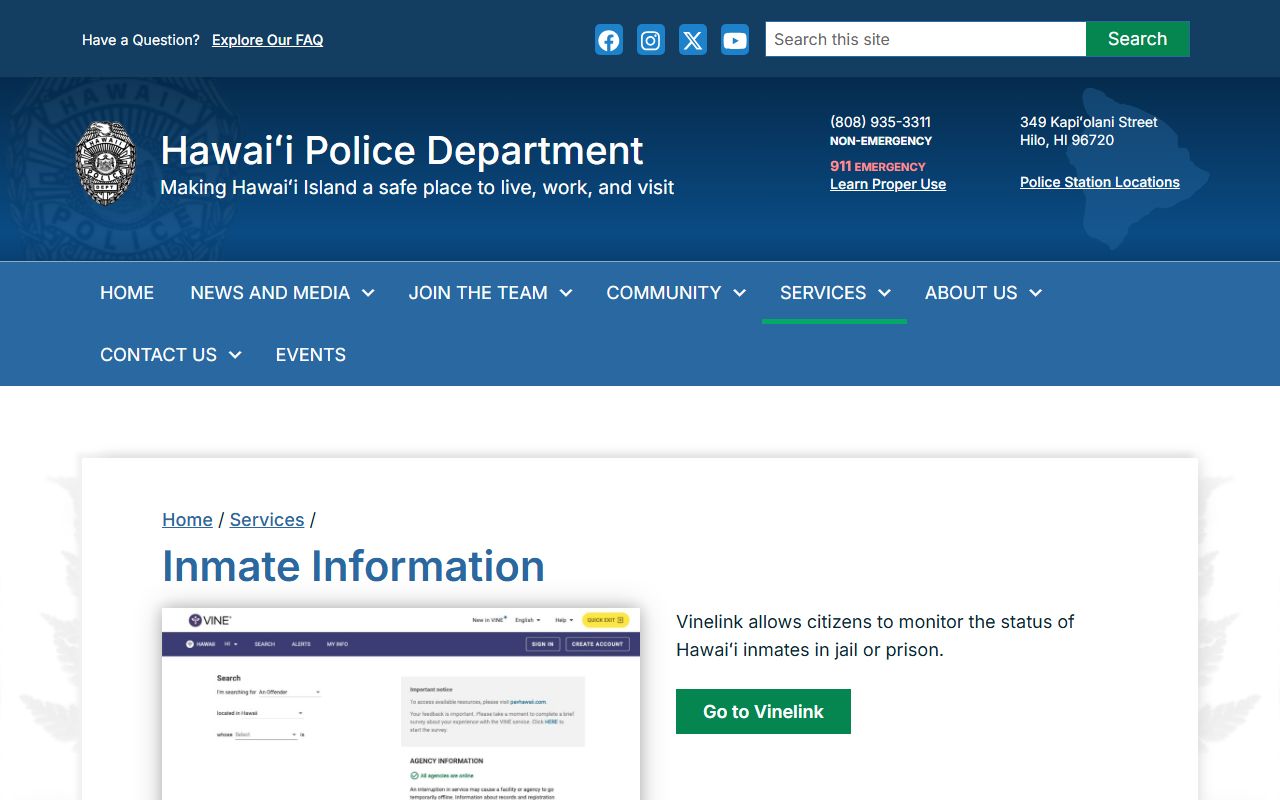
Sign up for alerts at vinelink.com or read the Hawaii Police inmate info page for a walk-through. The Hawaii Criminal Justice Data Center also runs the eCrim search for adult conviction records. eCrim shows charges, dispositions, and sentence info across the state. It covers Kalawao arrests routed through Maui. Access to eCrim has a fee. Records over 75 years old are open. More recent records may be limited by privacy rules.
The HCJDC also runs criminal history checks under state law. These checks are often used in background searches for licensing or court matters. They pull from the statewide database that tracks every state arrest and conviction. That includes the rare Kalawao County entry. For the check form and fee, see the HCJDC page. Pair HCJDC with SAVIN and with the DCR facility locator to get a full view of any Kalawao case.
Key state-level search tools for Kalawao County released inmates:
- Hawaii SAVIN through VINELink for custody alerts
- DCR facility pages for contact info on each prison
- HCJDC eCrim for adult conviction records
- Hawaii State Archives for historical settlement files
- Vital Records for birth and death linked to the site
Note: SAVIN data can lag a few hours behind the actual custody change, so always call the facility for time-sensitive confirmation.
UIPA Access for Kalawao County Records
Hawaii's Uniform Information Practices Act sets the rules for public records. The law is at Chapter 92F of the Hawaii Revised Statutes. The Office of Information Practices runs the program. Any state or county agency that holds Kalawao County records must respond to a UIPA request. The request must be in writing. It must describe the record. It must say how you want the record sent. The agency has 10 business days to respond. Complex requests can get an extension. Fees may apply for search time and for copies. Fee waivers may apply for requests in the public interest.
For a Kalawao County released inmates UIPA request, you have a few paths. A request tied to a modern arrest goes to the Maui Police Department or to the DCR. A request tied to historical settlement records goes to the Department of Health or to the Hawaii State Archives. A request for park-held files goes to the National Park Service under the federal Freedom of Information Act, not UIPA. State corrections records follow HRS 353, which sets the legal base for the state corrections system. Privacy limits still apply to any file that names a victim, a juvenile, or a person not yet charged.
The OIP site has a model UIPA request form. The form walks you through each field. It also lists the agency contacts for each state department. For Kalawao County work, the three key offices are Maui Police, the DCR, and the Department of Health. Each one accepts requests by mail, by email, or in person. Read the full rules at oip.hawaii.gov/laws-rules-opinions/uipa. The site also lists past OIP opinions that guide how agencies should treat each type of record.
UIPA fee rules set a base rate for search time and for copies. The first few minutes of search time are often free. After that, the agency can charge a set rate. Copy fees run a small amount per page. You get a fee estimate before the agency does the work. You can cut the fee by making the request narrow. Ask for a date range. Ask for a file type. Ask for records tied to one case or one name. A narrow request gets a faster answer. A broad request can bog down and lead to high fees.
Nearby Counties
Kalawao County sits on the north side of Molokai. The rest of Molokai, plus Maui and Lanai, make up Maui County. Maui County handles most Kalawao police work and holds Kalawao arrestees. These other Hawaii counties may apply when a case crosses islands.